Bitget ($351–387M, Sep 24) pushes DPRK past $1B in 2026 — should no-KYC cross-chain rails like THORChain be treated like mixers?
Bitget’s $387 million breach pushed North Korea-linked crypto theft past $1 billion in 2026. The harder question now is whether no-KYC cross-chain rails like THORChain should face mixer-like scrutiny when they function as laundering infrastructure.
Shuja Abrar · Blockchain Consultant & Engineer
- dprk
- thorchain
- mixer-risk
- sanctions
- defi
- compliance
On this page
Bitget’s September 24 theft, now traced at $387 million, matters for more than the exchange itself. Chainalysis says the attack pushed North Korea-linked crypto theft in 2026 past $1 billion, which makes this year another reminder that the fastest-growing part of crypto laundering is not a single mixer or one famous bridge, but the stack of services that can move value across chains, split it into pieces, and reassemble it with just enough friction removed to outrun investigators. The policy question is no longer whether criminals will use these rails. They already do. The real question is how regulators should classify the rails that make that movement easy, especially when they advertise themselves as no-KYC cross-chain infrastructure.
01DPRK’s laundering stack has widened
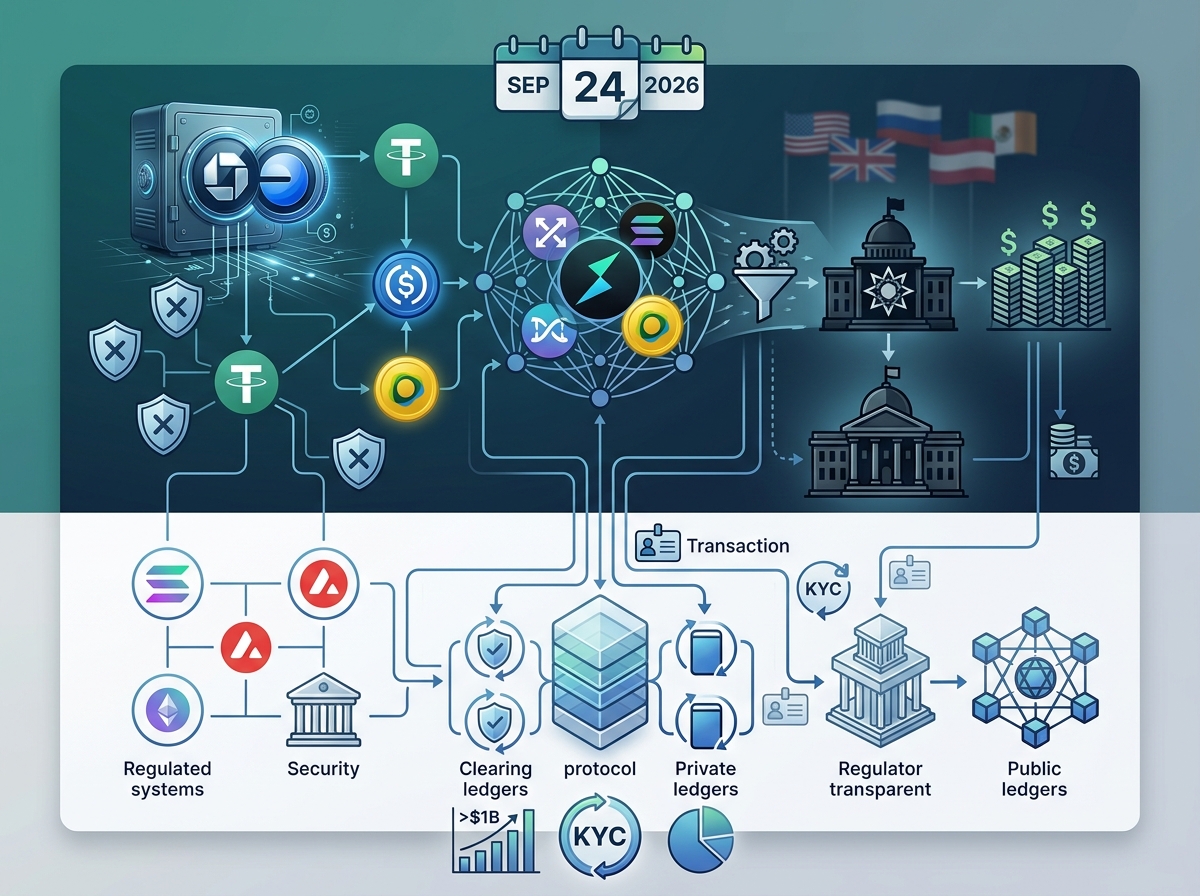
The Bitget investigation is useful because it shows how modern laundering works in practice. Chainalysis says the stolen funds left the exchange in the first three hours through 23 transfers and landed on four chains: Ethereum, XRP, Zcash, and Tron. From there, the attackers used cross-chain liquidity and messaging protocols, instant swaps, and laundering services to keep the funds moving. That is the important part. The exploit was not just one hop into a mixer and then into an exchange. It was a sequence of tools designed to break the investigative chain at every step.
That pattern fits what Treasury and Chainalysis have been warning about for years. Treasury’s 2026 proliferation-financing assessment says DPRK actors used a digital asset mixer and then moved funds into exchange accounts controlled by other DPRK nationals under aliases. Chainalysis’ broader 2026 crime report says DPRK-linked hackers stole $2 billion in 2025 alone, while 2026 is already past the $1 billion mark. The behavior is getting more industrial, not less. The state-backed actors are not loyal to one laundering primitive; they will use whichever combination of mixers, bridges, liquidity protocols, instant swaps, OTC brokers, and exchange accounts gets the job done.
That matters because it changes the regulatory baseline. If the threat were still mostly “a mixer plus a centralized exchange,” then policy could focus on two obvious choke points. Instead, the chain now runs through interoperable infrastructure that looks, at least on the surface, like normal crypto plumbing. Cross-chain swaps are not automatically suspicious. But when they become part of a state-sponsored laundering path, they stop being an abstraction and become a compliance problem.
02THORChain is not a mixer, but it can behave like one
THORChain should not be described as a mixer in the literal sense. Its own docs describe it as a decentralized, cross-chain liquidity protocol that lets users swap native assets across chains without wrapped tokens, accounts, or a custodial intermediary. The official frontend says there is no signup and no KYC. The walletless swap flow is even more stripped down: a user can submit funds to a deposit address and receive the output asset at a destination address without connecting a wallet.
That design is materially different from a classic mixer. A mixer pools many deposits, obscures provenance by commingling funds, and then pays out unrelated coins. A cross-chain swap protocol is doing something economically distinct: it is executing a market trade between assets on different chains. The protocol’s purpose is price discovery and liquidity, not concealment.
But design intent is not the only thing that matters. For a laundering actor, a no-KYC swap rail can function as a de facto obfuscation tool even if that is not its stated purpose. The reason is simple. It reduces identity friction, shortens the investigative window, and pushes value from one chain to another in a way that can break naive tracing heuristics. If the service also allows walletless access, the attacker does not even need a persistent account relationship. That is why the current debate should not be “is THORChain literally a mixer?” It should be “when a cross-chain rail provides the same concealment benefits that a mixer provides, should regulators treat the risk similarly?”
The answer should probably be yes, at least for high-risk flows. Not because the code is evil, and not because every user is suspect, but because the compliance outcome is what matters. A rail that repeatedly appears in laundering paths used by sanctioned or state-backed actors is no longer just neutral infrastructure. It is infrastructure with abuse characteristics that have to be priced into its regulatory treatment.
03Regulate control, not code
The strongest argument against calling THORChain a mixer is the one FATF has been making for years: technology neutrality. FATF’s updated guidance says the standards are meant to regulate the natural or legal persons behind technologies, not the technology itself. It also says that where a DeFi arrangement has no identifiable person with control or sufficient influence, there may not be a central owner-operator that meets the definition of a VASP. Even then, countries should monitor the risks and consider mitigants, including involving a regulated VASP in the activity where appropriate.
That framework is more useful than a blunt “everything decentralized is a mixer” rule. Treasury’s own history points in the same direction. OFAC sanctioned Blender in 2022 as the first virtual currency mixer designation, and later sanctioned Sinbad as another laundering tool used by the Lazarus Group. The point of those actions was not that every privacy tool is illicit. It was that services which indiscriminately obscure origin, destination, and counterparties for criminal proceeds are sanctionable facilitators when identifiable actors are running or promoting them.
That is the model regulators should apply to no-KYC cross-chain rails. If a protocol has identifiable operators, governance actors, frontends, affiliates, validators, liquidity managers, or other entities with sufficient influence over the service, then those persons should not be treated as passive bystanders when the rail is used repeatedly for laundering. They may not have to police every user, but they should be expected to implement controls that are proportionate to the risk their infrastructure creates: address screening, sanctions response, transaction monitoring, velocity limits, routing controls, and meaningful escalation paths for law enforcement requests.
If no such control exists, then code-level sanctions are a poor substitute for risk-based supervision. In that case, the right answer is usually to push compliance upstream and downstream, into the exchanges, stablecoin issuers, bridges, and cash-out points that touch the flow. FATF’s guidance is built for exactly that kind of judgment. The mistake would be to leave the entire burden on law enforcement after the funds have already crossed several chains and several jurisdictions.
04The workable standard is functional equivalence
The cleanest standard is functional, not formal. A no-KYC cross-chain rail should be treated like a mixer for regulatory risk purposes when four conditions converge: it enables atomic movement across chains, it materially reduces provenance visibility, it has identifiable people or entities with leverage over the service, and it is demonstrably used by sanctioned, criminal, or state-linked actors. Under that test, the question is not whether the protocol calls itself a DEX, a router, or a swap rail. The question is whether it performs the same laundering function as a mixer in the parts of the ecosystem that matter to supervisors.
That does not mean every decentralized protocol needs the same obligations as a centralized exchange. It does mean that “no-KYC” should not be treated as a safe harbor. In the DPRK case, the pattern is already clear: theft, rapid chain-hopping, instant swaps, mixers, and alias-based exchange accounts. A protocol that reliably sits inside that path should expect the same level of scrutiny that mixers already face.
For builders, the practical takeaway is uncomfortable but necessary. If your product can move value cross-chain without identity, you need to assume that sanctioned actors will test it. Build the controls before the enforcement action, not after. For compliance teams, the takeaway is equally direct: cross-chain movement is not a niche edge case anymore, and the Bitget exploit is another reminder that laundering paths are now modular. For policymakers, the right move is to keep the technology-neutral framework, but apply it aggressively to the humans and entities that can actually control, promote, or profit from the rail. That is how you protect legitimate interoperability without giving state-backed thieves a premium laundering corridor.
Share
Link opens on iamshuja.dev · previews show the site card
Sources
8- 01How Chainalysis Used AI to Trace the $387M Bitget Theft (2026-10-01)chainalysis.com
- 02Bitget Security Latest Incident Update: Fund Tracing and Recovery Bounty Programbitget.com
- 03Crypto Crime Reaches Record High in 2025 as Nation-State Sanctions Evasion Moves On-Chain at Scale (2026-01-08)chainalysis.com
- 04Updated Guidance for a Risk-Based Approach to Virtual Assets and Virtual Asset Service Providersfatf-gafi.org
- 052026 National Proliferation Financing Risk Assessmenthome.treasury.gov
- 06How to Swap on THORChain Without Connecting Your Wallet (2026-08-12)blog.thorchain.org
- 07What is THORChain and RUNE?docs.thorchain.org
- 08U.S. Treasury Issues First-Ever Sanctions on a Virtual Currency Mixer, Targets DPRK Cyber Threatshome.treasury.gov